Copa Mundial de la FIFA 2026: maximiza los ingresos de tu alquiler vacacional
El manual de 6 semanas sobre ingresos y experiencia del huésped para operadores de alquileres de corta estancia en ciudades anfitrionas
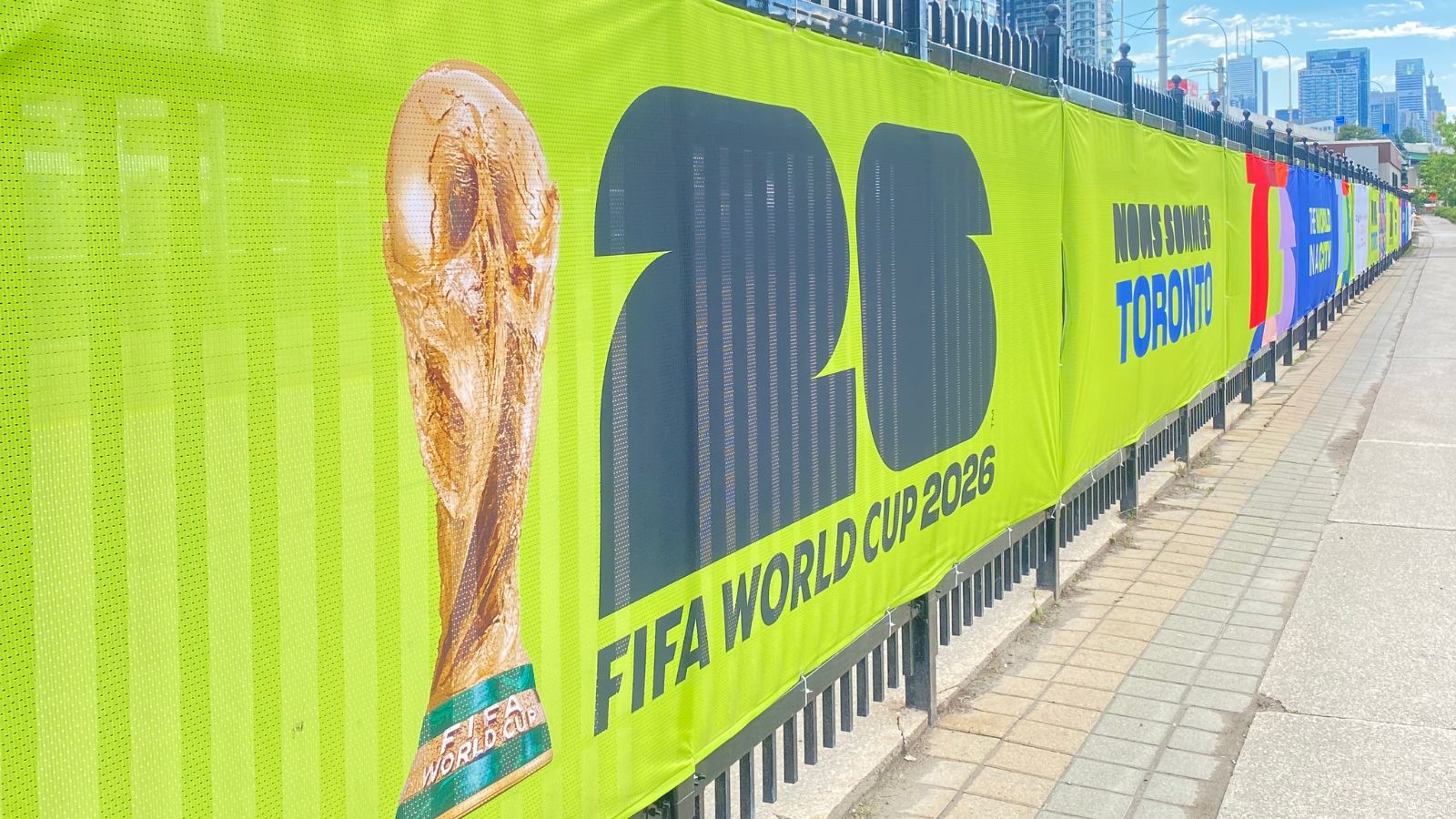
La Copa Mundial de la FIFA 2026 arranca el 11 de junio en Ciudad de México y concluye el 19 de julio en el MetLife Stadium de East Rutherford, Nueva Jersey. 16 ciudades anfitrionas: Toronto, Vancouver, la Bahía de San Francisco, Los Ángeles, Kansas City, Nueva York y más. 104 partidos. Aproximadamente 5 millones de visitantes internacionales en EE. UU., Canadá y México, el primer Mundial de la historia que se celebra en tres países.
Para los gestores de alquileres a corto plazo en las ciudades anfitrionas y sus zonas de influencia, este es el mayor evento de demanda de la década. Los gestores de ingresos llevan meses diciéndolo y los primeros datos son contundentes. Pero «cuánto debo cobrar» no es la única pregunta: ¿qué más estás haciendo para convertir esta ventana en un trimestre que defina tu año, y no solo en 38 noches caras?
Este artículo aborda tres aspectos que los gestores de alquileres vacacionales deben tener en cuenta más allá de las tarifas por noche: maximizar cada reserva con complementos, elevar la experiencia del huésped para impulsar futuras reservas y proteger las propiedades durante eventos de máxima demanda como este.
Conclusiones clave para los anfitriones de alquileres a corto plazo
La oportunidad es corta, pero la preparación se multiplica. Más de 5 millones de visitantes internacionales, más de 4000 $ de ingresos medios para el anfitrión más 150 $ de potencial de ingresos adicionales en cada reserva. El conjunto de complementos, verificación y experiencia del huésped que construyas ahora te hará ganar este verano y todos los años siguientes.
Pon un precio de 3 a 5 veces superior a tu base de verano. Los mejores gestores de ingresos coinciden en la estrategia de precios para el Mundial 2026: precios dinámicos, estancias mínimas de 4 a 5 noches durante la fase de grupos y optimización del RevPAR sobre el ADR.
Ingresos ≠ tarifa por noche. Los huéspedes de la FIFA llegan con presupuestos de viaje de cinco cifras. Los operadores que solo captan la tarifa por noche se pierden entre el 70 y el 80 % del gasto de los huéspedes.
Los complementos añaden entre 50 y 150 $ por reserva y consiguen que los huéspedes repitan. Las ofertas de comodidad, los artículos esenciales para familias, los extras corporativos y las experiencias locales aumentan los ingresos entre un 8 y un 30 %.
Protege sin añadir fricciones al huésped. Implementa seguros específicos para alquileres a corto plazo, exenciones de daños (más pequeñas y con menos fricciones que los depósitos de seguridad), verificación de identidad integrada y monitores de ruido respetuosos con la privacidad antes del 11 de junio de 2026.
La oportunidad del Mundial, en cifras
Los alquileres a corto plazo en las ciudades anfitrionas de EE. UU. podrían obtener los ingresos de todo un año de alquiler en un solo mes este verano, según BiggerPockets.
Deloitte (por encargo de Airbnb) prevé que los anfitriones ganarán una media de unos 4000 $ con una tarifa diaria media de unos 262 $, con Nueva York a la cabeza con unos 5700 $. Fortune informa de propiedades en la zona triestatal a tarifas prémium de 6000 $/noche. Los gestores de propiedades de Nueva Jersey están triplicando las tarifas: un solo alquiler de lujo podría superar los 240 000 $ en el periodo de 6 semanas.
El área metropolitana de Nueva York-Nueva Jersey espera más de un millón de visitantes internacionales. Las tarifas hoteleras en los mercados de acogida han subido un ~300 % (New York Times). Airbnb está pagando 750 $ a los nuevos anfitriones que publiquen nuevos anuncios antes del 31 de julio.
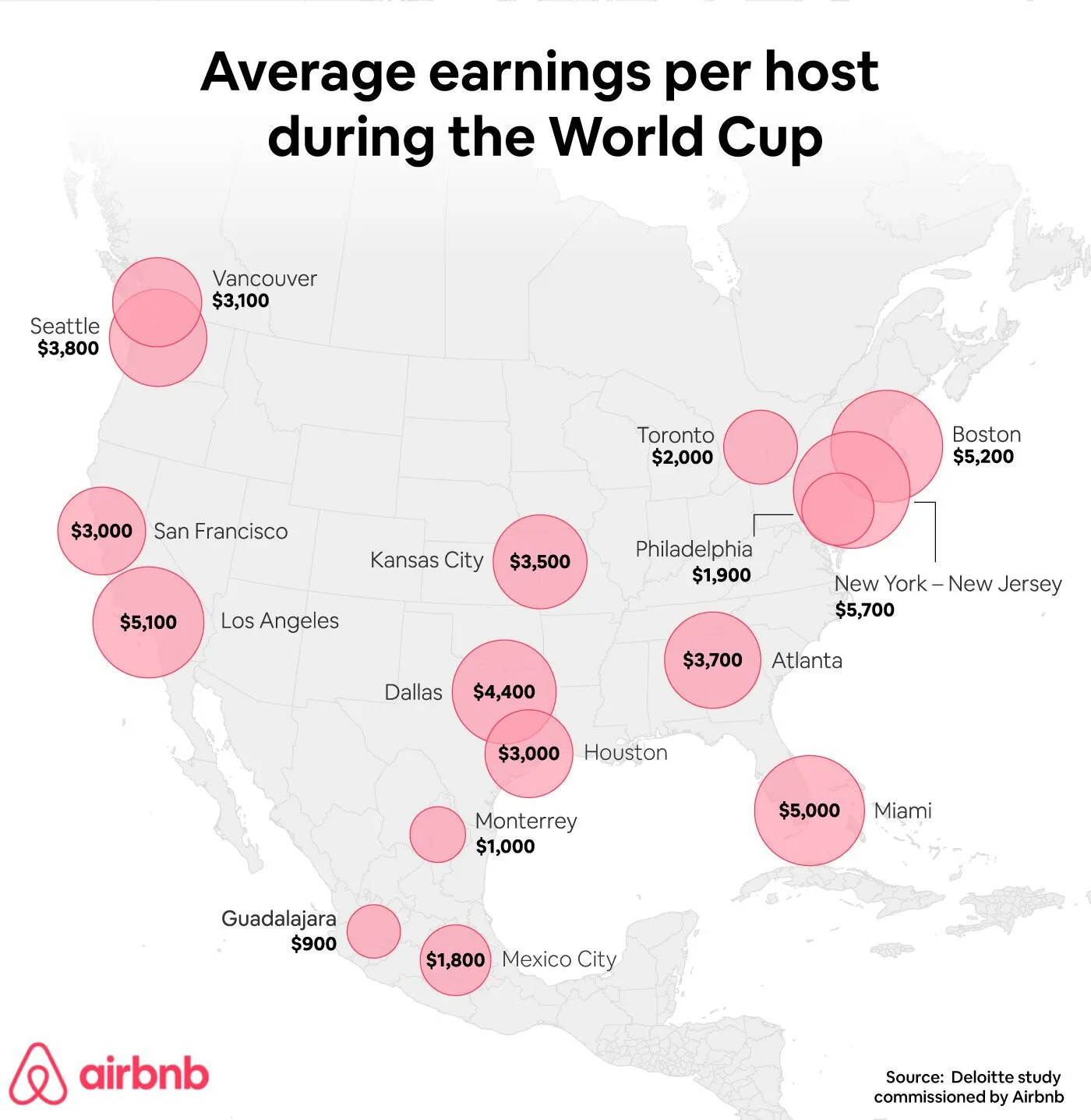
Kansas City espera 650 000 visitantes con solo 65 000 habitaciones de hotel y está reclutando a unos 500 nuevos anfitriones —incluidos propietarios de viviendas cerca del Arrowhead Stadium— para satisfacer la demanda de este acontecimiento deportivo mundial. Esto revierte la tendencia de mano dura contra los alquileres a corto plazo de los últimos años.
El Mundial 2026 es una ventana corta para que los anfitriones de alquileres a corto plazo recuperen todo un año de demanda internacional perdida. Las visitas canadienses a EE. UU. cayeron un 22 % el año pasado; los viajes entrantes a EE. UU. han disminuido durante 9 meses consecutivos.
Recomendaciones de precios para el Mundial de la FIFA 2026
Los expertos en gestión de ingresos del sector de los alquileres a corto plazo, PriceLabs, Wheelhouse y Beyond Pricing, están asesorando sobre estrategias de precios fundamentales para los operadores de las ciudades anfitrionas: actuar ya, fijar precios de forma dinámica y optimizar el RevPAN (ingresos por noche o habitación disponible), no solo las tarifas diarias medias.
Esto es lo que recomienda específicamente cada plataforma para el Mundial 2026:
Táctica | Recomendación | Fuente |
|---|---|---|
Anclaje de precios | Establece tarifas para los días de partido de 3 a 5 veces superiores a tu base típica de verano (Wheelhouse), o anclalas en el percentil 90 del mercado más un margen del 20 % (PriceLabs). Las propiedades cercanas a los estadios o a las Fan Zones suben más. | PriceLabs, Wheelhouse |
Apertura del calendario | Carga las tarifas del evento con 12 a 18 meses de antelación. Los viajeros internacionales de Europa, Sudamérica y Asia planifican con un año de antelación: no dejes los calendarios en los valores predeterminados de verano. | Wheelhouse |
Ajuste dinámico | Ajusta las tarifas con datos de la competencia en tiempo real una vez que tu mercado alcance un 50-60 % de compresión de ocupación. Utiliza herramientas como el Market Dashboard de PriceLabs y los datos de AirDNA. | PriceLabs |
Reglas de estancia mínima | Mínimo de 4 a 5 noches durante la fase de grupos, rebájalo a 2 o 3 noches para las rondas eliminatorias para captar a los viajeros de un solo partido. Combínalo con grandes descuentos para estancias de más de 5 noches. | PriceLabs, Wheelhouse |
Noches huérfanas | Duplica la tarifa en las noches sueltas que queden colgadas entre reservas, o evítalas por completo estructurando estancias mínimas en torno a los días de los partidos. | PriceLabs, Wheelhouse |
Posicionamiento del anuncio | Destaca el acceso al transporte público, cocinas completas, lavandería y wifi de alta velocidad. Los grupos que se quedan más de 4 noches necesitan servicios que los hoteles no pueden ofrecer. Los aficionados internacionales priorizan el transporte público. | PriceLabs, Wheelhouse |
Métrica de ingresos | Optimiza para RevPAR/RevPAN, no para el ADR. Las tarifas por noche elevadas pierden valor rápidamente cuando las restricciones de mínimos o los huecos en el calendario reducen la eficiencia de las reservas. | Beyond Pricing, Wheelhouse |
Momento de fijar precios | Establece los precios pronto y ajústalos de forma dinámica. El poder de fijación de precios aparece antes que los índices de ocupación; esperar a que se agoten las plazas de forma visible significa perder la ventana de reserva de mayor valor. | Beyond Pricing |
Calma a mitad de ciclo | Espera una curva de reservas en forma de U: aumento inicial, calma intermedia y prisa de última hora. No saldes a bajo precio durante la calma. En su lugar, utiliza un descenso gradual (bajadas del 10 %, reducciones de estancia mínima de una noche). | Wheelhouse |
Señal del mercado | La demanda no es uniforme. Los mercados con poco inventario (Kansas City, Seattle) tienen mayor poder de fijación de precios; los mercados de alta densidad (Nueva York, Los Ángeles) se enfrentan a una competencia más dura, pero a un mayor volumen. Observa las tendencias de reserva locales por encima de los titulares nacionales. | PriceLabs, Wheelhouse |
Por qué los ingresos ≠ tarifa por noche durante el Mundial 2026 y después
La actualización de abril de PriceLabs muestra que algunas ciudades están tocando techo con los precios. Vancouver (BC Place) tiene el menor crecimiento de ocupación de los 16 mercados con estadios, con solo un +1 %, debido a que los gestores aumentaron los ADR un 149 % hasta alcanzar los 342 $, dejando fuera a los viajeros que ya se enfrentan a la inflación de los vuelos y a los costes de la temporada alta de verano. Para aprovechar el crecimiento sin frenar las reservas, maximiza cada reserva más allá de la tarifa por noche.
Los huéspedes de la FIFA llegan con un presupuesto de viaje que no se parece en nada al de tu huésped habitual de verano. Las entradas para los partidos oscilan entre los 60 $ y los 11 000 $. Los traslados de ida y vuelta al aeropuerto desde el MetLife Stadium cuestan 150 $ para un trayecto de 9 millas. Los aficionados ya se han comprometido a realizar viajes de cinco cifras antes incluso de elegir un lugar donde alojarse.
Si solo estás captando la tarifa por noche —incluso una agresiva—, estás cobrando una fracción de lo que estos huéspedes se están gastando. Los operadores que recordarán el verano de 2026 como un trimestre histórico para sus carreras son los que piensan en la ventana de 6 semanas como tres capas combinadas: fijar el precio correcto, elevar la experiencia del huésped con complementos que consigan que repita y proteger la propiedad con firmeza.
He aquí tres pilares que los operadores de alquileres a corto plazo no deben perderse durante eventos de gran impacto como el Mundial 2026.
Complementos de alquiler vacacional para los huéspedes del Mundial 2026
Los complementos no son solo un añadido de ingresos. Son la forma en que los huéspedes experimentan tu propiedad como algo más que un lugar para dormir, y cómo un huésped que reserva por primera vez para el Mundial se convierte en un cliente que vuelve el próximo verano, se lo cuenta a sus amigos y reserva de forma directa la segunda vez.
El alojamiento suele representar solo entre el 20 y el 30 % del presupuesto de viaje de un huésped. El resto —transporte, comida, experiencias, equipamiento, comodidad— fluye hacia alguna parte. Para la mayoría de los operadores de alquileres a corto plazo, fluye hacia otra persona.
Actualmente, los gestores de propiedades captan menos del 5 % del presupuesto total de viaje de sus huéspedes. Y los ingresos por reservas que sí captan se transfieren en gran medida a las OTA y a los propietarios. Los ingresos por complementos se quedan por completo en tu margen, y la experiencia que ofrecen es lo que convierte una estancia en una relación.
Los operadores experimentan un aumento de ingresos del 8 al 30 % con los complementos, sin necesidad de añadir nuevas propiedades, simplemente sacando el máximo partido a sus alquileres actuales. Las referencias agregadas de carteras de alquileres a corto plazo de este año muestran que los gestores de alquileres vacacionales generan más de 50 $ por reserva en ingresos auxiliares, y los que obtienen mejores resultados ven cómo sus ingresos por complementos superan a la propia tarifa por noche.
Los mejores extras para ofrecer a los huéspedes del Mundial este verano
Complementos de comodidad
El check-in anticipado, la salida tardía y las limpiezas a mitad de estancia son los complementos que mejor convierten en cualquier mercado. La demanda se disparará con la llegada anticipada de huéspedes internacionales, salidas tardías y grupos que se queden durante periodos de varios partidos.Artículos esenciales para familias
Cunas, tronas, compra previa de alimentos, traslado al aeropuerto... todo lo que permita a un grupo de varias generaciones aterrizar y deshacer las maletas sin problemas logísticos.Extras para grupos y corporativos
Servicio de lavandería prémium, acceso flexible, transporte a la carta, salida tardía. Los grupos de 10 a 20 personas pagarán por un funcionamiento sin fricciones.Experiencias locales
Presenta opciones locales en tus comunicaciones con los huéspedes y gana una comisión cuando reserven. Las ofertas van desde excursiones y recorridos turísticos hasta chefs privados y masajes a domicilio, contratados directamente con empresas locales o a través de conserjes externos como Localbird o YHangry. Los huéspedes se divierten, recuerdan su estancia contigo y dejan una reseña de cinco estrellas; tú te quedas con el margen.
La respuesta operativa es un portal del huésped unificado y automatizado que personaliza las ofertas según el contexto de la reserva, las envía en el momento adecuado del viaje y procesa la transacción en un solo clic. Este es exactamente el trabajo para el que se diseñó la plataforma de experiencia del huésped de Enso Connect: mensajería impulsada por IA, un portal del huésped de marca propia, pagos integrados y automatización de complementos que funciona sin necesidad de propuestas manuales.
No olvides los conceptos básicos de la experiencia del huésped
Los huéspedes internacionales son mucho más sensibles a la experiencia básica de la estancia: un acceso sencillo a la propiedad, una comunicación rápida y útil, y un contexto local claro. Antes de añadir complementos, asegúrate de que:
El acceso remoto y el check-in online estén configurados, con los códigos de las cerraduras inteligentes entregados automáticamente.
Las instrucciones de llegada y check-in estén detalladas y se envíen en el momento adecuado.
Todo lo que el huésped pueda preguntar (wifi, servicios, recomendaciones locales, normas de la casa) esté ya en su portal del huésped, para que no tenga que escribirte.
La mensajería basada en IA esté activa para ofrecer respuestas las 24 horas del día, los 7 días de la semana, en el idioma del huésped.
Qué configurar ahora, antes del 11 de junio:
Configura los principales complementos: check-in anticipado, salida tardía, noches libres entre reservas y limpieza a mitad de estancia. Ofrece varios niveles de precios y utiliza precios señuelo para guiar la elección.
Automatiza los mensajes de complementos a lo largo del proceso: confirmación de la reserva, 2 semanas antes, 48 horas antes, día 2 de la estancia; programados según cada tipo de complemento.
Conéctalo con las operaciones. Con Enso Connect puedes personalizar cualquier flujo de trabajo según tus operaciones exclusivas, de modo que cuando un huésped contrate una salida tardía, el calendario de tu personal de limpieza se actualizará automáticamente.
Mide semanalmente los ingresos por complementos en tu panel de Enso Connect y redobla esfuerzos en lo que mejor convierta.
Capta la relación al salir. Dirige a cada huésped satisfecho a tu base de datos de reservas directas con una invitación personalizada para volver. Los huéspedes del Mundial que hayan tenido una gran experiencia serán tu base de clientes recurrentes para 2027.
Un sistema automatizado de complementos puede añadir de forma realista entre 50 y 150 $ por reserva, sin necesidad de propiedades adicionales. En 20 propiedades durante un periodo de 6 semanas, eso representa entre 25 000 y 75 000 $ de ingresos con margen neto, además de tus ganancias por ADR, y un grupo de huéspedes internacionales que volverán, reservarán directamente y se lo contarán a sus amigos.
Protege las propiedades sin añadir fricciones
Los viajeros internacionales, los grupos grandes, el alcohol, las barreras idiomáticas y la adrenalina general de un torneo aumentan la probabilidad de daños a la propiedad y reclamaciones de responsabilidad civil. Un propietario que cobre 2000 $ por noche cerca del MetLife Stadium podría enfrentarse a decenas de miles de dólares en pérdidas no cubiertas por un solo incidente. El objetivo es una protección por capas que funcione de forma invisible junto a una excelente experiencia del huésped, no una fricción que empañe la estancia antes de que empiece.
Seguro específico para alquileres a corto plazo
Revisa la cobertura entre 60 y 90 días antes de tu primera reserva para el Mundial, es decir, ahora mismo. Trabaja con aseguradoras diseñadas para alquileres a corto plazo (Proper Insurance, Safely, Steadily).
Depósitos de seguridad y exenciones de daños como concepto estándar.
Los depósitos de seguridad de entre 500 $ y 1000 $ son ahora habituales en los anuncios de las ciudades anfitrionas. A los huéspedes no les gusta que se les bloqueen cantidades tan elevadas en sus tarjetas, por lo que ofrecer sustituir esto por un pago no reembolsable más pequeño en concepto de exención de daños puede eliminar fricciones. Es importante asegurarse de que los huéspedes entiendan que las exenciones de daños cubren los daños accidentales (normalmente hasta el importe de su depósito de seguridad, es decir, 500 $ en este caso).Verificación de huéspedes integrada
Antes, la verificación implicaba un panel de control independiente, un enlace que había que perseguir y un huésped que a veces no la completaba. Con la recogida integrada de selfies e identificaciones de Enso Connect, el cobro de la exención de daños y la firma electrónica de los contratos de alquiler se realizan dentro del flujo normal del huésped antes de su llegada. Un portal de marca, una sola ruta de clics. Esto es fundamental para las reservas de huéspedes internacionales sin historial de valoraciones en EE. UU.: la verificación integrada y el control biométrico facial con Truvi o Autohost detectan identificaciones robadas, números de teléfono que no coinciden, perfiles duplicados y patrones de reserva sospechosos.Monitores de ruido respetuosos con la privacidad en la vivienda
Dispositivos como Minut y NoiseAware evitan fiestas (control de decibelios y ocupación en tiempo real), detectan el humo de tabaco en interiores (un factor común de daños durante la época del Mundial) y añaden protección contra incendios y temperatura, todo ello sin grabar audio ni vídeo. Airbnb prohibió las cámaras interiores en abril de 2024; los monitores de ruido declarados están permitidos explícitamente. Decláralos en tu anuncio; la mayoría de los huéspedes agradecerán la señal de que gestionas el alojamiento con seriedad.
Qué configurar ahora:
Elige una capa de protección contra daños —exención, depósito o ambos— y estandarízala en toda tu cartera a partir del 1 de mayo.
Activa la verificación de identidad integrada y el cobro de exenciones de daños dentro de tu portal del huésped para que cada reserva del Mundial siga el mismo flujo sin fricciones, independientemente del canal.
Instala monitores de ruido interiores en todas las propiedades de las ciudades sede del Mundial y conecta las alertas a tu plataforma de mensajería para enviar avisos automáticos y con el estilo de tu marca a los huéspedes.
img id="148">
La ventana de 6 semanas y lo que viene después
Los operadores que traten el Mundial 2026 como un acontecimiento de precios tendrán un buen verano. Los operadores que lo traten como un acontecimiento operativo —una oportunidad para instalar el motor de complementos, la capa de verificación y el sistema de control que deberían haber tenido de todos modos— tendrán un buen verano y un negocio estructuralmente más fuerte para los próximos cinco años de grandes acontecimientos deportivos y grandes eventos por venir.
Para cuando se dé el primer puntapié en Ciudad de México, los anfitriones de tu mercado que hayan hecho este trabajo ya habrán empezado a recaudar la diferencia.
Ahora mismo, lo que está consolidado:
La fijación de precios dinámicos está madura, se comprende bien y se utiliza de forma generalizada.
Las exenciones de daños, los seguros específicos para alquileres a corto plazo y la verificación integrada están disponibles, son asequibles y se integran limpiamente con los principales PMS.
El control de ruido respetuoso con la privacidad cumple con las normas de las plataformas y cuenta con la aprobación de los vecinos.
Se ha demostrado que los complementos automatizados aumentan el RevPAN entre un 10 y un 15 % en las carteras que realmente los implementan.
Cómo te ayuda Enso Connect a prepararte para la Copa Mundial de la FIFA 2026:
Experiencia del huésped totalmente integrada: un portal, una pasarela de pago, una capa de cribado y verificación de huéspedes, y un hilo de mensajería único para toda la estancia.
Complementos que se adaptan al contexto de la reserva en directo, al calendario de partidos, al perfil del huésped y al inventario en tiempo real (por ejemplo, noches libres ofrecidas solo cuando la lógica del calendario lo permite).
Mensajería para huéspedes basada en IA que gestiona el volumen de mensajes multilingües sin perder la voz del anfitrión.
Nada de eso está esperando a 2027. La ventana de 6 semanas es lo que va a obligar a hacer la actualización.